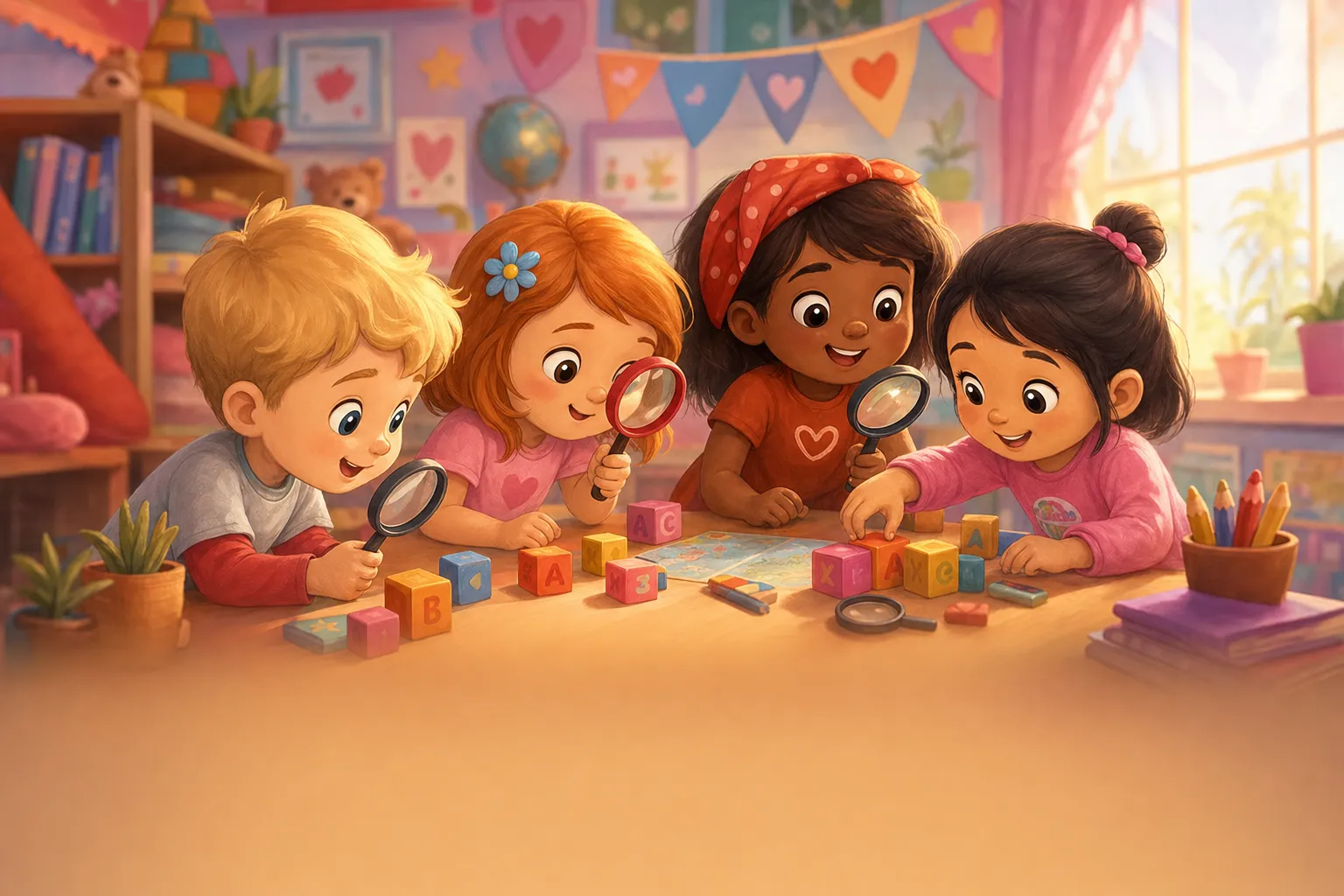
Teddy Learners
They're not babies anymore. But they still need magic, hugs, and someone to explain the word 'why' in two languages.
Age & Overview
Age Range
2½–4 years
Hours
Mon–Fri, 07:30–18:30
Meals
All meals included
Available At
RBW, RB3/RB5 & ZML
Mentor Model
Primary caregiver tracking emotional/social growth
Extras
Weekly bilingual journals, TeddyConnect updates

A predictable rhythm, and room to grow
Our preschoolers start the day with circle time, singing, and thematic activities. They enjoy fruit snack, outdoor play, creative projects, and a warm lunch.
In the afternoon, we offer rest — some children nap, others enjoy quiet games or storytime.
Teddy Powers (That Stick for Life)
Bilingual Play Everyday
We don't 'teach' two languages—we live them. Songs, stories, play… all come in Dutch and English.
Teducation™ at Work
Your child's mind is wired for pattern-making, problem-solving, and play. We call it Teddyfication when their spark lights up!
Feelings Made Friendly
Meltdowns. Hugs. Solving arguments with blocks. We help children name emotions, hold space, and still make it to circle time.
Skills That Stick
Counting, sorting, dressing themselves… life-ready milestones emerge through everyday magic.
What to bring each day
Please label everything clearly (even socks — they teleport 😄)
- ✓Extra underwear
- ✓Extra pants and shirt
- ✓Sleeping bag (no blankets)
- ✓Warm clothes (in winter)
- ✓Swimsuit (in summer)
- ✓Indoor shoes (optional)
- ✓Comfort item (if needed)
- ✓Medication with signed form
"I walked in and my son was explaining what 'boos' means in English. He's three. I actually teared up."
Potty training — we're in it together
We start potty training when your child is ready — or when it's started at home. We make it positive, playful, and pressure-free.
- •Stickers for success
- •After 3 accidents in a day, we pause until the next day
- •It's a team effort — no shame, no stress
Gallery
Outdoor treasure hunts in two languages
Daily Rhythm
Arrival, dress-up, open-ended play
Warm welcomes and child-led exploration to start the day.
Circle time (Dutch & English stories)
Community building with songs, stories, and sharing in both languages.
Outdoor science or project play
Hands-on discovery and exploration in our natural spaces.
Lunch + toddler debates
Nutritious meals with lively conversations and emerging opinions.
Nap time / quiet sensory play
Rest for those who need it, gentle activities for others.
Group work or big questions
Exploring important topics like 'Why is the moon round?' and other philosophical wonders.
Music, dance, movement games
Creative expression and joyful movement to engage body and mind.
Pick-up hugs and emotional debriefs
Reflections on the day and warm goodbyes.
We gently build independence, social skills, and confidence — through play, every day.
The Growth Book
Every Teddy preschooler gets their own Growth Book:
Hand and foot prints
First drawings
Little notes from teachers
Milestones like first sentences or friendships
The book grows along with your child — and becomes a treasure.
Big steps for little people
At Teddy Kids, preschool isn't about performance — it's about practice. We help children put on their own jackets, finish their plates, solve conflicts, and find the words for big feelings.
Putting on their own jacket
Finishing their plate
Solving conflicts
Finding words for big feelings
We don't push. We guide gently. So that when it's time for the next step, they walk toward it with confidence.
Locations Offering Teddy Learners
Frequently Asked Questions
What does a typical preschool day look like?
How many preschoolers does one educator care for?
How do you handle potty training?
How does bilingual learning work for preschoolers?
What do preschoolers eat for lunch?
Do children play outside every day?
How do you track and share my child's development?
Still figuring out if your child is ready?
So is every parent. That's why we're here—no pressure. Just answers, smiles, and options.