Breastfeeding Twins After a C-Section
A gentle, step-by-step guide to building your milk supply with the Medela Solo pump.
Warm, practical support for mums of preterm twins (from week 31) recovering from a C-section. You'll find proven, calm techniques to establish and hold your milk supply — one feed at a time.
Start reading
Last updated: 5 July 2026
Your breastfeeding journey
After a C-section with preterm twins, building your milk supply takes a little strategy and a lot of gentleness with yourself. This guide brings together evidence-based techniques so you can feel calm, confident and well-supported.
Take it at your own pace — you don't have to master everything at once. Small, steady steps add up beautifully.
What to expect: the first 14 days
Days 1–3
Colostrum phase
Your body makes nutrient-rich colostrum — liquid gold. Pump 8–12 times a day to get things going. The amounts are small (around 5–10 ml), and that's exactly right for your twins' tiny tummies.
Days 4–5
Milk transition
Your colostrum begins turning into mature milk. You may notice more volume and a change in colour and consistency. Keep pumping often — this is your supply waking up.
Days 6–14
Supply establishment
Aim for 500–750 ml per day by day 14. Consistency matters most here — and hands-on massage plus skin-to-skin contact give your output a real boost.
Using the Medela Solo pump
The Medela Solo uses 2-Phase Expression technology that gently mimics your baby's natural sucking pattern — so it works with your body, not against it.
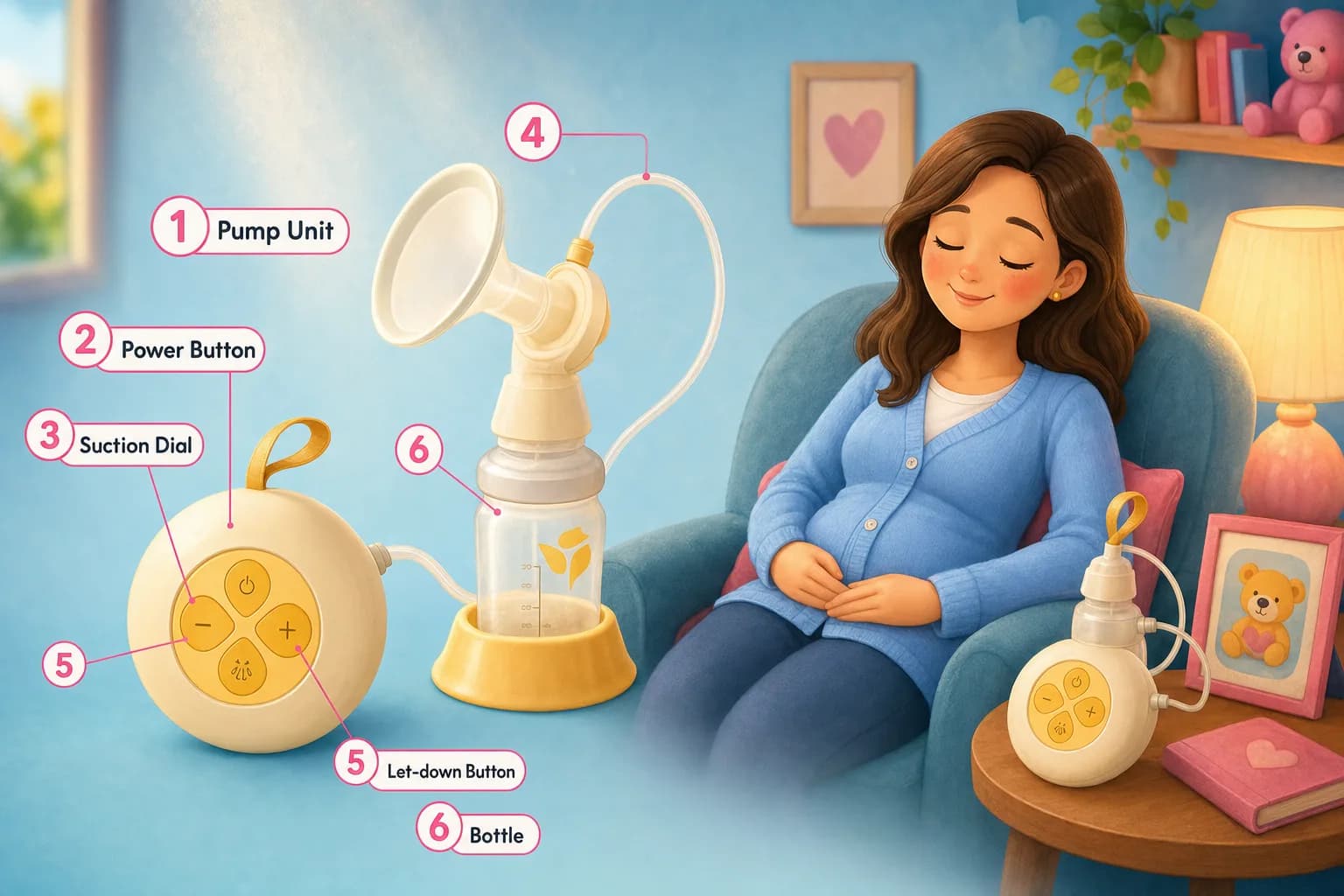
Stimulation phase
~2 minutes (automatic)A fast, light rhythm that invites your let-down reflex. The pump starts here on its own — just let it work. If milk hasn't started flowing after 2 minutes, press the let-down button.
Expression phase
10–15 minutesSlower, deeper suction that draws milk efficiently — the pump switches to this automatically. Turn the suction to the highest level that still feels comfortable, add some hands-on massage to reach the deeper ducts, and continue until the flow really slows.
Set-up in five calm steps
- Wash your hands and breasts with warm water
- Choose the right breast shield size — it should cover the areola without pinching
- Apply a warm compress for 2–5 minutes before you start
- Sit in a comfortable position with good back support
- Check that the tubing and bottle are properly connected
Breast massage & hands-on pumping
Pairing gentle massage with pumping increases milk output by around 48% on average and helps you reach the deeper milk ducts. It's the single biggest lever you have — and it feels calming too.
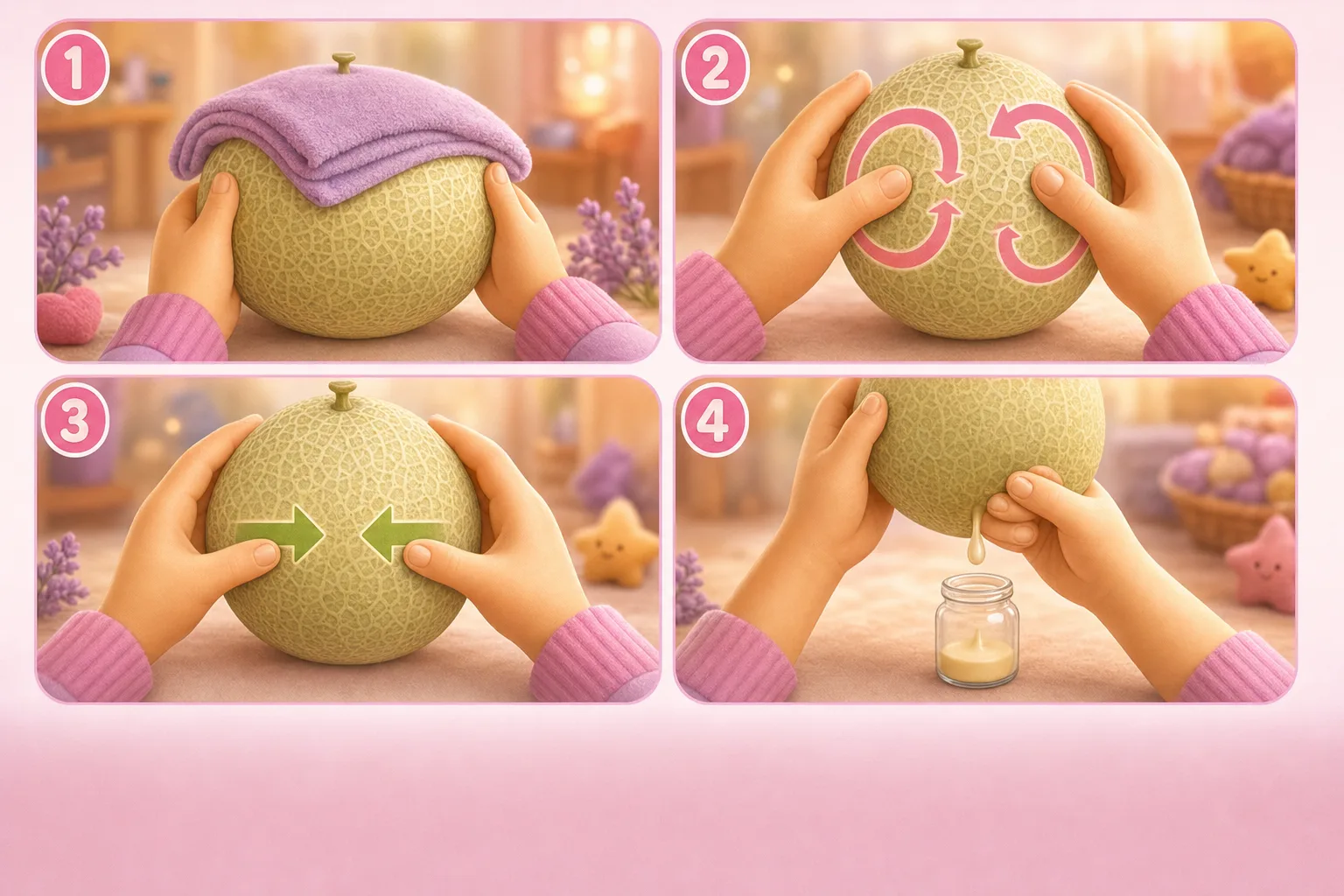
Step 1 — Warm compress
2–5 minutes
Rest a warm compress on your breasts (or take a warm shower) for 2–5 minutes. Warmth increases blood flow and helps milk move more easily.
Step 2 — Gentle massage
2–3 minutes
With your fingertips, massage each breast in soft circular motions. Start at the outer edges and work slowly toward the nipple.
Step 3 — Hands-on pumping
During the expression phase
While you pump, use your free hand to gently massage and compress the breast. Focus on any areas that feel full or tender.
Step 4 — Hand expression
2–3 minutes after pumping
After you finish pumping, spend 2–3 minutes hand expressing. This reaches milk the pump may have missed and draws out the richer, higher-fat milk.
- Increases milk output by up to 48%
- Helps prevent engorgement and blocked ducts
- Raises the fat content of your milk — important for your babies' growth
- Shortens the time you need to spend pumping
Breastfeeding positions for twins
After a C-section, the right position keeps weight off your incision while letting you feed both babies comfortably. These three are firm favourites.
Double football (clutch) hold
Best for C-section recovery & twinsBoth babies tuck at your sides like little footballs, bodies along your forearms and heads at breast level — resting on pillows, never on your incision.
- Sit upright with pillow support on both sides
- Place the first baby at your left, cradled in your left arm
- Place the second baby at your right, cradled in your right arm
- Let their bodies rest on the pillows, off your incision
- Gently guide each baby to latch
- Keeps babies' bodies off your C-section incision
- Lets you see both babies' faces
- Gives you good control for positioning
- Works well for preterm babies
Side-lying position
Good for rest & night feedsYou lie on your side with your baby alongside you at breast level — a restful way to feed one baby at a time.
- Lie on your side with pillow support
- Position your baby on their side, facing you
- Make sure baby's mouth is at nipple level
- Tuck a pillow behind baby's back for support
- Minimal pressure on your incision
- A restful position for you
- Great for night feeding
Upright / cradle hold
Once C-section pain easesThe classic hold: baby cradled in your arm with their head resting in the crook of your elbow — lovely once your incision feels more comfortable.
- Sit upright with good back support
- Cradle your baby in one arm
- Let baby's head rest in the crook of your elbow
- Gently guide baby to latch
- Traditional and familiar
- Good for establishing a latch
Comfort & pain tips
- Take prescribed pain relief 20–30 minutes before a feed
- Use extra pillows to cushion the incision area
- Apply an ice pack to the incision (15 minutes) before feeding if it's swollen
- Change positions often to avoid pressure on one spot
- Wear loose, comfortable clothing
Pumping schedule for preterm twins
Consistency is everything. Aim for 8–12 pumping sessions across 24 hours, including at least one night session — that's when prolactin, your milk-making hormone, is highest.
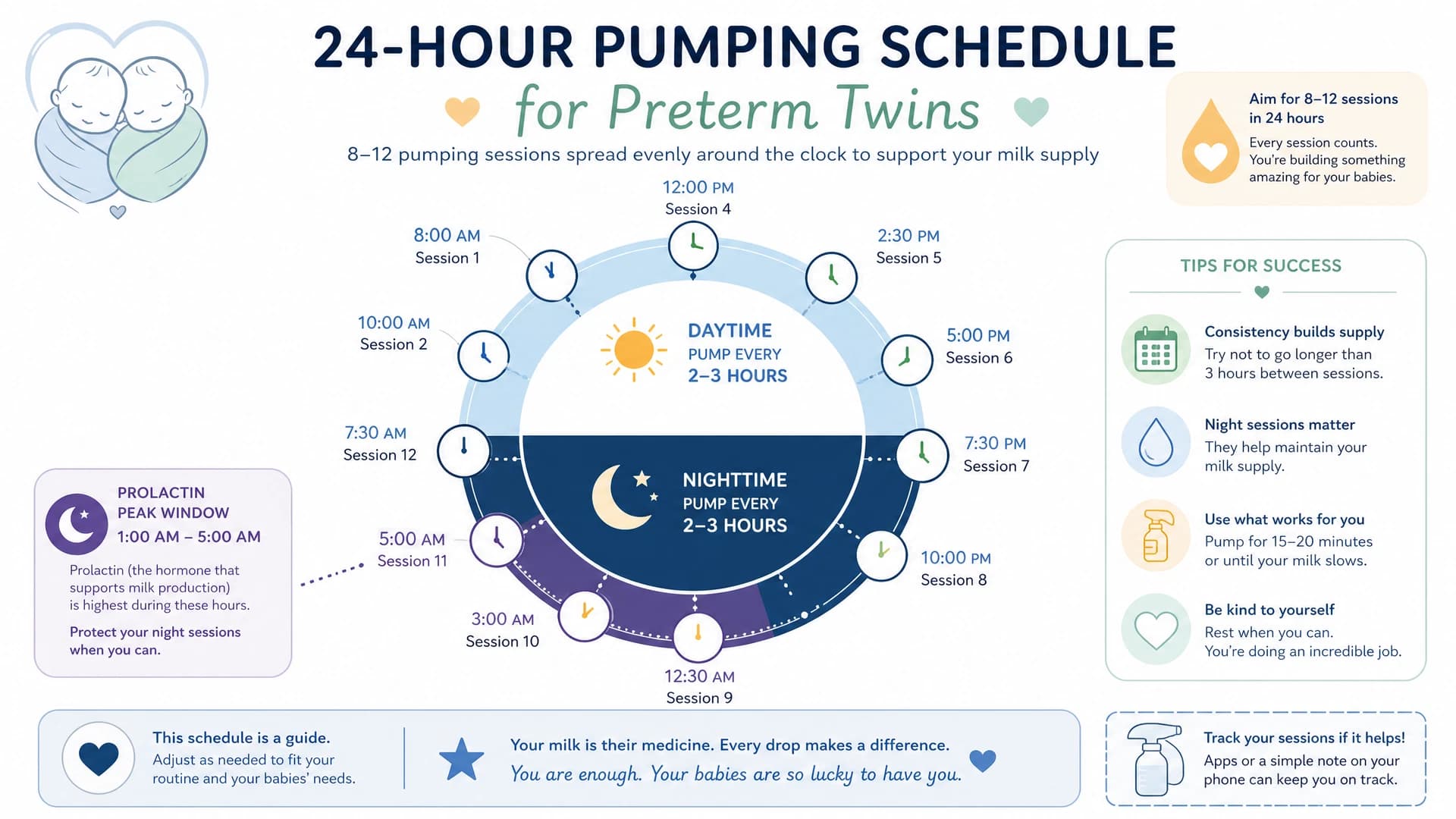
| Time | Duration | Note |
|---|---|---|
| 6:00 AM | 15–20 min | Morning session |
| 8:30 AM | 15–20 min | |
| 11:00 AM | 15–20 min | |
| 1:30 PM | 15–20 min | |
| 4:00 PM | 15–20 min | |
| 6:30 PM | 15–20 min | |
| 9:00 PM | 15–20 min | |
| 3:00 AM | 15–20 min | Night session (high prolactin) |
- Pump every 2–3 hours, including at least one night session (1–5 AM, when prolactin peaks)
- Alternate which breast you pump first to keep your supply balanced
- Keep a pumping log to track output and timing
- Stay hydrated and eat nourishing meals
Skin-to-skin contact (kangaroo care)
Holding your babies against your bare chest boosts oxytocin and prolactin, which improves both your let-down and your milk production. It's good for them and good for you.
Why it helps
- Stabilises your baby's heart rate and temperature
- Reduces your baby's stress and perception of pain
- Strengthens the bond between you and your babies
- Improves your baby's feeding behaviour
How to practise it
- Wear open-front clothing (a hospital gown or button-up shirt)
- Hold your baby skin-to-skin against your bare chest
- Cover baby with a blanket for warmth
- Stay like this for at least 20–30 minutes
- Do it as often as you can — especially before pumping
Nutrition for milk production
Making milk for two little ones asks for extra calories and plenty of fluids. Feed yourself as kindly as you feed them.
Calories & nutrition
- Add 300–500 extra calories per day
- Eat protein-rich foods: eggs, chicken, fish, beans, yoghurt
- Include healthy fats: nuts, avocado, olive oil, oily fish
- Choose whole grains: oatmeal, brown rice, wholemeal bread
- Add fruit and vegetables for vitamins and minerals
Hydration
- Drink a glass of water with every pumping session
- Keep a water bottle nearby while you pump
- Go easy on caffeine and avoid alcohol
Galactagogues (milk-boosting foods)
- Oatmeal (one of the most-studied milk-boosting foods)
- Brewer's yeast (stir into oatmeal or smoothies)
- Flaxseed (ground or whole)
- Fenugreek (check with your doctor first)
- Fennel seeds (in tea or food)
Always check with your healthcare provider before taking supplements or herbal galactagogues.
Common challenges & gentle solutions
Bumps in the road are normal. Here's what tends to help.
Low milk supply
- Increase pumping frequency to 10–12 times daily
- Use hands-on pumping and breast massage
- Make sure your breast shield fits correctly
- Practise skin-to-skin contact
- Increase your hydration and nutrition
- Reach out to a lactation consultant
Pain during pumping
- Lower the suction level (it can still be effective)
- Apply a warm compress before pumping
- Take pain relief before you start
- Check for a proper latch if breastfeeding directly
- Pump more often (every 2 hours)
- Add hands-on massage
- Apply a cold compress after pumping (15 minutes)
- Wear a supportive bra
Blocked ducts
- Massage the affected area gently while pumping
- Vary your pumping positions
- Increase pumping frequency
- Make sure the breast is emptying well
- Practise skin-to-skin contact before pumping
- Use a warm compress and massage
- Reduce stress and pain where you can
- Look at photos of your babies while you pump
Frequently asked questions
When should I start pumping after a C-section?
As soon as you can — ideally within 1–2 hours of delivery if you're medically stable. Early stimulation really matters for establishing your supply.
How long should each pumping session last?
About 15–20 minutes total: roughly 2 minutes of stimulation, then 10–15 minutes of expression. Stop when the milk flow slows right down.
Is it normal to get very little milk in the first few days?
Completely normal. In the first 3 days you make colostrum — 5–10 ml per session is typical, and it's perfect for your preterm babies' small stomachs.
Can I breastfeed directly if my babies are in the NICU?
Once your babies are stable enough, yes. Start by pumping to build your supply, then gradually introduce direct breastfeeding as they grow stronger.
How do I know if I'm producing enough milk?
Track your output — aim for 500–750 ml per day by day 14. Also watch your babies' wet nappies and weight gain, with guidance from your care team.
What if one baby is a stronger feeder than the other?
Alternate which baby feeds from which breast to balance the stimulation. The stronger feeder on one side helps build production for the other.
Can I use the Medela Solo for both babies?
Yes, though it's single-sided, so you'll pump one breast at a time. Some mums later move to a double pump for efficiency, but the Solo works well for establishing your supply.
How long do I need to pump?
For as long as you'd like to provide breast milk. Many mums pump for 6–12 months or longer for twins — there's no single right answer, only what works for your family.
Extra support
You don't have to do this alone. These people and places can help.
- La Leche League — breastfeeding support
- NVL — find a lactation consultant in the Netherlands
- Medela support — pump troubleshooting and guidance
- NICU parent support groups — connect with other parents
- Your own healthcare provider and lactation consultant
About this guide
This guide is for educational purposes and is based on evidence-based medical practice and lactation science. It doesn't replace personal medical advice — always check with your healthcare provider, lactation consultant or NICU team for guidance that fits you and your babies.
Teddy Kids is here for you
As your twins grow, we grow with you — with warm, bilingual childcare in Leiden.